Manilva Pueblo Property Prices 2026: Notarial EUR/m2 in the Hilltop White Village
Registered notarial sale prices for Manilva Pueblo, the inland hilltop white village: what apartments and villas actually sold for at the notary in June 2026.
In Manilva Pueblo, the registered sale price, what buyers actually paid at the notary, averaged 1,928 EUR/m2 across all property types in June 2026, with apartments at 1,959 EUR/m2 and villas at 1,906 EUR/m2 (listyco notarial data, 2026-06, Consejo General del Notariado). New-build villa data is not available for this zone. These are real closing prices recorded at the notary, not asking prices from portals, and they position the hilltop white village as the most affordable registered zone in the Manilva municipality, well below the coastal communities that share its municipal boundary.
What did property actually sell for in Manilva Pueblo in 2026?
Registered notarial sales in the zone averaged 1,928 EUR/m2 across all property types in June 2026: 1,959 EUR/m2 for apartments, 1,906 EUR/m2 for all villas, 1,906 EUR/m2 for resale villas, and n/a for new-build villas (listyco notarial data, Consejo General del Notariado). These are the prices recorded at the notary when a deed is signed, the most reliable public signal of what a home in this inland Andalusian pueblo actually changed hands for.
| Property type | Registered price (EUR/m2), Manilva Pueblo, June 2026 |
|---|---|
| All property types | 1,928 |
| Apartments | 1,959 |
| All villas | 1,906 |
| Resale villas | 1,906 |
| New-build villas | n/a |
Source: listyco notarial data, 2026-06 (Consejo General del Notariado). The new-build villa figure is n/a because too few registered new-build villa transactions fell in the zone this month to report a reliable figure, a pattern shared with most inland pueblo zones on the Costa del Sol. The identical all-villa and resale-villa figures mean every villa transaction in this period was a resale, with no new-build villa completions recorded separately. The narrow 53 EUR/m2 gap between the apartment figure and the villa figure is itself a signal of the zone’s character: in an inland pueblo where the stock is a mix of village townhouses, small flats and older country properties, the two segments trade in similar per-square-metre ranges, unlike beachfront zones where land scarcity drives a wide villa premium.
What kind of place is Manilva Pueblo and who buys there?
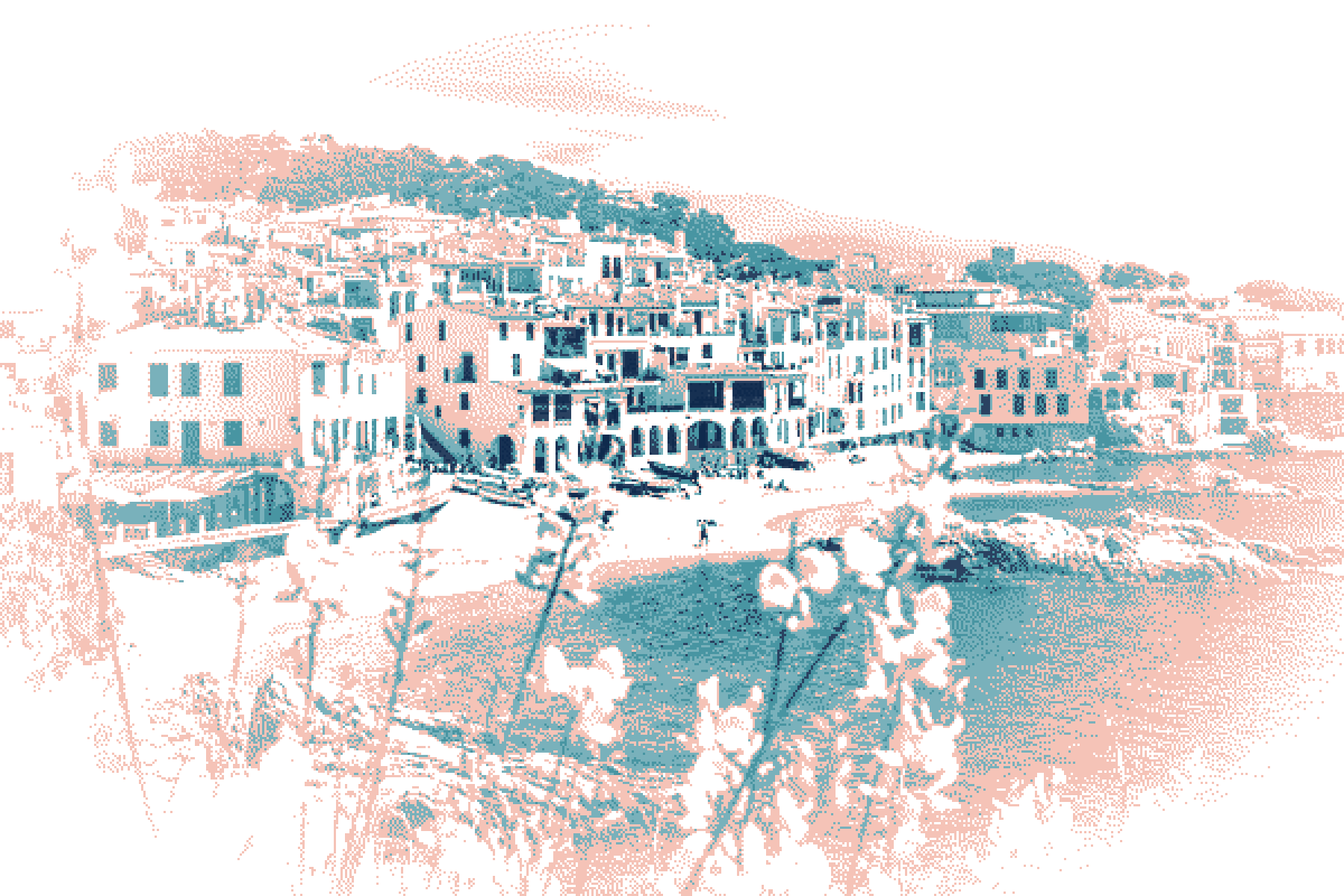
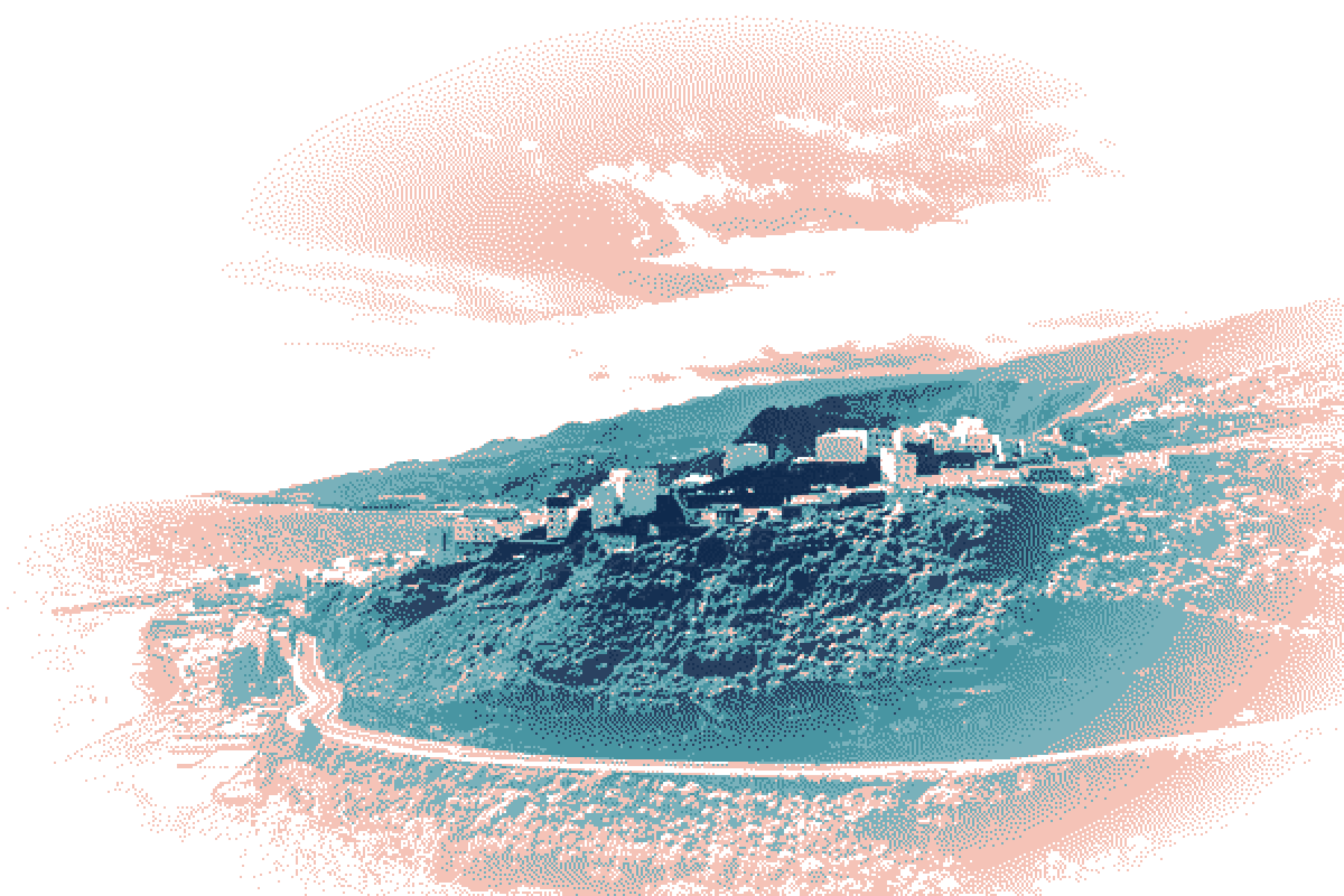
Manilva Pueblo is the original hilltop white village of the Manilva municipality, perched at approximately 128 metres above sea level, two to three kilometres inland from the coast (Ayuntamiento de Manilva). The village wraps around its church and main plaza, with winding cobbled streets, whitewashed facades and views across vineyards and olive groves to the Mediterranean. The surrounding landscape is agricultural, dominated by Moscatel de Alejandría vineyards that have defined the area’s identity for centuries. The municipality of Manilva had 18,165 residents on the 2025 padron (INE), distributed across three population nuclei: the pueblo itself, Sabinillas on the coast, and El Castillo near the Puerto de la Duquesa marina. The foreign community accounts for approximately 39 per cent of residents, with British nationals forming the largest single foreign group at 2,285 people (INE, 2025 Annual Population Census).
The housing stock in the pueblo is distinctly different from the coastal urbanisations. Village townhouses and small apartment blocks line the narrow streets around the historic centre, while detached villas and older fincas sit on the hillsides and surrounding countryside. The stock is predominantly resale, with limited new-build activity within the village itself. The village was founded in 1530 as the Cortijo de Manilva, dependent on the neighbouring town of Casares, and was granted its own municipal charter (the Real Privilegio de Villazgo) in October 1796, separating it from Casares (Ayuntamiento de Manilva). This long agricultural history shapes the built environment: the pueblo grew around wine production, not tourism, and the architecture reflects that origin.
The buyer profile is a mix of local Spanish families, international lifestyle buyers drawn by the village character and vineyard setting, and investors seeking an affordable entry point on the western Costa del Sol. British buyers are particularly well represented in the wider municipality, and some choose the pueblo over the coast for the authenticity and lower prices. Retirees and pre-retirees value the walkable village layout and the local bar and restaurant culture. The trade-off is clear: the beach, the marina and the golf courses are a short drive, not a stroll. For the wider Costa del Sol market context, the Nueva Andalucia property prices guide covers the premium Marbella market that sits at the opposite end of the price spectrum.
What drives prices in Manilva Pueblo?
Four structural factors shape the EUR/m2 figure in this zone, and understanding them is essential to reading the registered average correctly.
The hilltop pueblo discount. The single most important price driver is location. Manilva Pueblo sits inland, separated from the coast by two to three kilometres of vineyard-covered hills. The coastal communities within the same municipality, Puerto de la Duquesa and Sabinillas, command higher registered prices because they offer direct beach access, marina amenities and sea views. A buyer choosing the pueblo over the coast is paying for village character, space and tranquillity rather than waterfront immediacy. This inland discount is the structural feature that places the pueblo’s registered average well below the municipality’s coastal zones on the same notarial measure (listyco notarial data, 2026-06, Consejo General del Notariado).
The Moscatel vineyard heritage. The surrounding vineyards are not just scenery. Manilva is one of the southernmost wine-producing areas in Europe, cultivating Moscatel de Alejandría grapes that are sun-dried and pressed into sweet wine using traditional methods. The Fiesta de la Vendimia, held on the first weekend of September, celebrates the grape harvest and is recognised as a Festival of Provincial Tourist Interest by the Malaga Diputacion (Malaga.es). This agricultural heritage constrains development: the vineyard land is working agriculture, not residential plot land, which limits the supply of new housing around the village and preserves the rural setting that defines the pueblo’s character.
The balanced stock mix. The narrow 53 EUR/m2 gap between apartments and villas reflects the pueblo’s stock composition. In beachfront zones, the villa premium is wide because direct coastline plots are scarce. In Manilva Pueblo, the stock is a mix of village townhouses (which often transact at apartment-like per-m2 figures), small apartment blocks, and older detached properties on the hillsides. The result is that the two segments trade in similar ranges, producing the narrowest apt-villa spread of any zone in the Manilva municipality. This is the signature of an inland pueblo market, not a beachfront investment market.
The western Costa del Sol position. Manilva sits at the south-western edge of Malaga province, 97 kilometres from Malaga city and 35 kilometres from Gibraltar (Ayuntamiento de Manilva). This position places it at the junction of the Costa del Sol and the Campo de Gibraltar, a location that has historically been less developed than the central Marbella-Estepona corridor. The lower registered prices reflect this position, but they also mean the pueblo offers one of the most affordable entry points on the entire Costa del Sol for buyers who are willing to live inland. For the rental yield perspective on the wider market, the Marbella rental yields guide covers the buy-to-let returns that coastal zones generate.
How does Manilva Pueblo compare to neighbouring zones?
Manilva Pueblo occupies the lowest price tier within its own municipality. Its registered all-type average of 1,928 EUR/m2 sits below the coastal zones of Puerto de la Duquesa, Sabinillas and La Duquesa on the same notarial measure (listyco notarial data, 2026-06, Consejo General del Notariado). The price step between the pueblo and the coast reflects the fundamental trade-off in the Manilva municipality: beachfront and marina living command a premium, while the hilltop village offers character and space at a lower entry point.
To the east, the Estepona municipality offers a range of zone profiles. The Estepona town centre and pueblo zones provide urban and village living at higher registered levels than Manilva Pueblo, reflecting Estepona’s larger population and stronger tourism demand. The Estepona New Golden Mile area guide covers the beachfront corridor that runs east from Estepona town, a market that sits well above Manilva Pueblo on price.
To the north and west, the historic town of Casares, from which Manilva was separated in 1796, sits in the hills above the coast. Casares is a classic Andalusian white village (pueblo blanco) perched on a dramatic rocky spur, and the two municipalities share a border and a history. Buyers comparing Manilva Pueblo and Casares are choosing between two inland village settings with different characters: Manilva is closer to the coast and flanked by vineyards, while Casares is more dramatically positioned but further from beach access. Neither has a dedicated zone price page yet in the notarial dataset.
Why are registered prices lower than asking prices?
The notarial average of 1,928 EUR/m2 is a registered closing price, not an asking price. Asking prices in Manilva Pueblo typically start above EUR 150,000 for a village apartment or townhouse and reach above EUR 500,000 for a detached villa with land and views. These are list prices set by sellers and their agents. Registered notarial prices are what actually closed at the notary after negotiation, across the full transaction mix including older properties, smaller units and transfers that would never appear in a prime listing feed. The gap between the two reflects negotiation outcomes, the variety of properties that transact and the time lag between listing and completion.
For the national market trajectory, Tinsa’s IMIE Local Markets index reported 15.2 per cent year-on-year growth in the second quarter of 2026, the highest rate since the third quarter of 2006 (Tinsa, IMIE Mercados Locales Q2 2026, published 30 June 2026). The INE Housing Price Index stood at 12.9 per cent year-on-year in the first quarter of 2026 (INE, IPV Q1 2026). These national figures frame the broader Spanish market context in which Manilva Pueblo’s local figures sit. A buyer should treat the notarial figure as the evidence of what closed and asking prices as the negotiation starting point. For the full acquisition-cost breakdown, including the 7 per cent Andalusian ITP on resales, see the cost of buying guide.
How should a buyer read the Manilva Pueblo data?
The registered figures confirm Manilva Pueblo’s position as the most affordable zone in the Manilva municipality and one of the lowest entry points on the western Costa del Sol. The all-type average of 1,928 EUR/m2 is a blended figure that combines village townhouses, small apartments and older detached properties. A buyer should read it as a zone-level summary rather than a representative figure for any single property type. An apartment buyer should anchor on the 1,959 EUR/m2 figure, and a villa buyer on the 1,906 EUR/m2 figure.
The identical all-villa and resale-villa figures confirm that the villa segment is entirely resale, with no new-build villa completions recorded separately. This is a supply signal: the pueblo is a established village market, not a development zone. New construction within the village is constrained by the historic layout and by the agricultural land that surrounds it. The n/a for new-build villas tells a buyer that standalone new villa completions are too few to report, which is typical of an inland pueblo where the housing stock turns over slowly.
The Manilva municipality continues to grow. The official padron figure of 18,165 residents (INE, January 2025) reflects sustained population growth driven largely by foreign arrivals, with British nationals forming the largest international community. This demographic trend underpins housing demand across all price tiers in the municipality, from the beachfront urbanisations to the hilltop pueblo. For buyers seeking authentic village life on the Costa del Sol at a price point well below the coast, Manilva Pueblo offers a proposition that few other zones in the region can match.
Frequently asked questions
- What is the average price per m2 in Manilva Pueblo in 2026?
- Registered notarial sales averaged 1,928 EUR/m2 across all property types in June 2026, with apartments at 1,959 EUR/m2 and villas at 1,906 EUR/m2 (listyco notarial data, Consejo General del Notariado). These are closing prices recorded at the notary, not asking prices from portals. New-build villa data is not available for this zone.
- Why are prices in Manilva Pueblo lower than the coast?
- Manilva Pueblo sits two to three kilometres inland on a hilltop at 128 metres, surrounded by vineyards rather than beachfront. The coastal communities of Puerto de la Duquesa and Sabinillas command higher registered prices because they offer direct beach access and marina amenities. The pueblo appeals to buyers who value village character and space over coastline proximity.
- Is Manilva Pueblo a good place to buy property?
- The registered 1,928 EUR/m2 figure makes Manilva Pueblo one of the most affordable entry points on the western Costa del Sol. Buyers get authentic village life, vineyard views, and proximity to the coast by car at a fraction of beachfront prices. The trade-off is that day-to-day amenities are limited and the beach is a drive, not a walk.
- What is Manilva Pueblo famous for?
- Manilva Pueblo is famous for its Moscatel de Alejandría vineyards and the Fiesta de la Vendimia, a grape harvest festival held on the first weekend of September and recognised as a Festival of Provincial Tourist Interest. The village produces sweet Moscatel wine using traditional methods passed down through generations.
- How far is Manilva Pueblo from the beach and Gibraltar?
- Manilva Pueblo sits about two to three kilometres inland from the coast. The municipality of Manilva is 97 kilometres from Malaga city and 35 kilometres from Gibraltar, at the south-western edge of Malaga province where the Costa del Sol meets the Campo de Gibraltar.
Sources and data
- Centro de Informacion Estadistica del Notariado (notarial transaction statistics) — Consejo General del Notariado
- IMIE Mercados Locales 2 trimestre 2026: +15,2% — Tinsa
- Indice de Precios de Vivienda (IPV), Primer trimestre 2026 — INE
- Padron Municipal de Habitantes (population statistics) — INE
- Manilva: situacion e historia — Ayuntamiento de Manilva